Reprinted from the Don't Erase Me: Why culture matters in mental health issue of Visions Journal, 2026, 21 (3), pp. 17-19
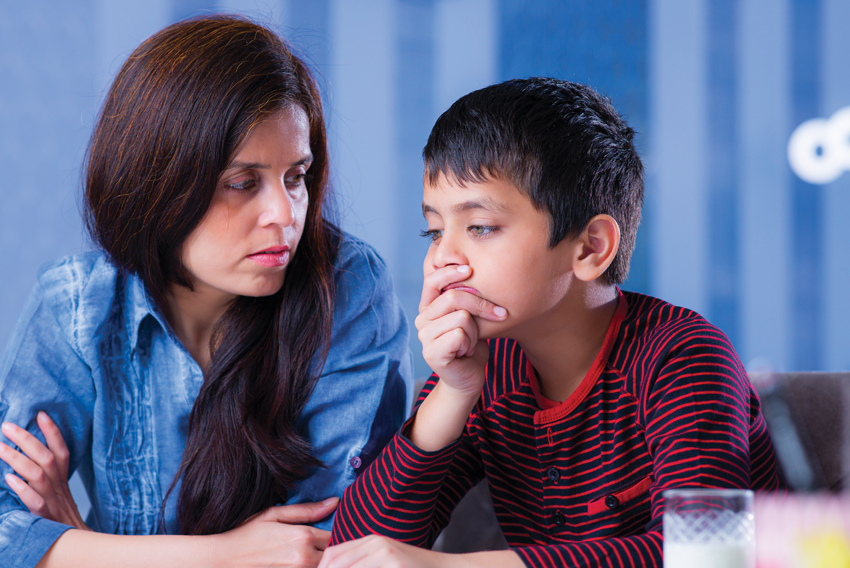
In many families, attitudes towards mental health are passed down through the generations. Expressions like “We faced real challenges back in our day, this is nothing” are usually meant to encourage strength. But they unintentionally minimize a person’s emotional struggles. Intergenerational views create a barrier to seeking support because individuals feel pressured to “toughen up.”
In my culture, people avoid talking about mental health. Those conversations are seen as signs of weakness. The belief is that such traits are not present “in our family” and “our genes are strong.” People must discover solutions alone.
I was left alone as a child to navigate my path. Besides other odds I faced, I was physically abused. Now, as a mother to my own child who struggles with his mental well-being, I can feel like protecting and supporting him puts me at war with my own people.
Silent victimization
I was beaten up brutally by a family member every day growing up, sometimes multiple times a day. It happened randomly—at home, at family gatherings, at my school—and I lived with constant fear. The shape of my day was at the mercy of this individual’s mood.
I was sad about why this seemed so normal. Why didn’t anybody stand up for me? Why didn’t anyone question the bully? Instead, I was asked not to make a big deal about it and cover up the act. Beatings were often compensated by gifts. “Cheer up, you’re a good girl,” family members would say, patting me on the back. Not once did they ask how I felt, or if it hurt.
A socially acceptable exterior
Surprisingly, these people were highly educated with good social standing. Our lives were balanced and refined from the outside, hurtful and dark inside. Believing they couldn’t be wrong, unable to defy societal norms, I too kept showing up like nothing ever happened. But for years I cried secretly in the washroom knowing there was no escape. This affected my mental health.
It was not easy to face peers at elementary and high school, cousins or guests at home who saw me getting beaten. I became a muted and lonely person.
I remember on the first day of college, I attended orientation day with a black eye. Instead of asking how I was feeling, my mother gave me her diamond earrings to match my dress. A guest speaker looked straight into my face, but I didn’t flinch. I had become immune to such glares.
My abuse—severe enough that I once became catatonic, so emotionally disconnected I ended up in hospital—continued until I was 27. It only stopped because I got married. I was happy leaving that house, ready for my new beginnings, full of hope, love and companionship.
Struggling towards new patterns
My son is the first grandchild in my family and the only male child. He was recently diagnosed with mental health challenges including borderline personality disorder and generalized anxiety disorder. In my culture, aspirations get attached to future generations. I’ve heard things like: “You don’t have to share this with anyone, he’ll be fine when he mans up.” For this reason, I haven’t been able to share his diagnoses with our families.
I want to protect my son’s image. He could easily be labelled as “mental”—the word widely used in my culture. So we cover up his distressing moments, explaining them as anxiety due to study pressures. This saves us from any shame attaching to the family name and replaces it with a moment of pride in his dedication to scholastics.
My son also experiences self-harm. Visible scars on his body speak loudly about his mental health struggles. He wears long-sleeved shirts to hide his arms, especially with friends or chosen families.
After seeing fresh marks on his neck recently, I was looped into the future. I may have been a strong mother holding his hand, but I also felt myself succumbing to cultural and societal fears, and stereotypes about mental health: Who will entrust their daughter to him? Will he find a partner who will understand him? As his parents, this is a big topic for us. But recognizing these cultural patterns is essential if we want to foster more compassionate conversations across generations.
Letting in some air
During a visit to the ER with my son, I scanned through brochures we received. One described an organization called FamilySmart. Feeling directionless, I registered for one of their online workshops, called “Help for the Hard Times.” It was designed for parents whose child or youth has been a patient in a psychiatric unit or visited an ER visit due to their mental health.
I vividly remember my husband and I feeling overwhelmed after our first session. Meeting other families coping with similar challenges removed our feeling of isolation. We learned that this organization includes parents with lived or living experiences. They support other parents because they understand what it sounds like, feels like and looks like.
For example, my son was 17 during his first hospital visit. We received no guidance there, and I’ll never forget how we ran between departments due confusion over his transitional age group. But FamilySmart came through with emotional support, without us having to fill out any forms. Their services were free, with no waitlist. It’s a shame that we rarely feel this safe sharing our big feelings with our immediate or extended families.
Making room for feelings
Things would be so different if people were given a chance to voice their emotions without their words being twisted. I promised myself my children would have a life chosen by them. I wonder if I have succeeded. While we have open discussions at home, why didn’t my son tell me sooner about being bullied at school, for example? What stopped him?
We all have to feel free—not judged—when sharing big feelings. Validating and acknowledging young people's feelings while teaching them how to survive and fight is an important step. To those suffering from hurt or abuse, please get help, before it’s too late.
Related ResourcesTo learn more about FamilySmart, please visit familysmart.ca. And find out more about the Help for the Hard Times workshop at: familysmart.ca/help-for-the-hard-times-workshop |
About the author
Nupur is a mother of two. Of South Asian descent and first generation in a Western country, Nupur is exploring ways to live up to her own ideals of motherhood. An aspiring professional, she is also striving to develop her personal identity while maintaining her cultural heritage