How community input can lead to respectful help
Reprinted from the Don't Erase Me: Why culture matters in mental health issue of Visions Journal, 2026, 21 (3), pp. 26-28
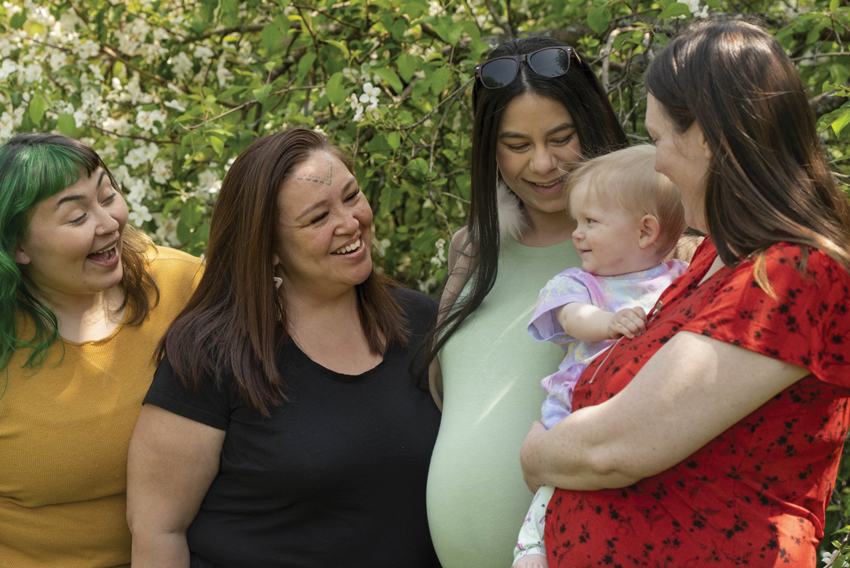
Recently, the co-authors gathered for a series of discussions. Rebecca and Jolan shared insights from the program Big Worries, Strong Spirit (hereafter BWSS), and Bonnie and Robert discussed their work on Strengthening Families Together – Indigenous (hereafter SFT-I).1
BWSS is a free program designed to support First Nations, Métis and Inuit families whose children, aged 3–12, are struggling with big worries—also known as anxiety. Since BWSS has been active for nearly two years, the idea was for Rebecca and Jolan to share learnings with Bonnie and Robert that may assist with SFT-I program development. SFT-I offers support to Indigenous families to better cope with a loved one with mental illness.
It became clear early in the discussions that the learnings were mutual and reciprocal. This article captures shared themes that came up in these conversations.
Non-Indigenous umbrella programs
Both BWSS and SFT-I were created from existing mental health programs. BWSS came about when an Indigenous advisory group,2 a working group of Indigenous professionals and Elders used a blueprint from an existing program3 to create new content with an Indigenous focus.
BWSS is now in Year 2 of its development, but work is still underway to make the program more culturally safe, with a stronger foundation in Indigenous theories of health and well-being. To enhance cultural safety, BWSS is:
- collaborating with a program development team, including the resident Elder, an Indigenous clinician, a non-Indigenous clinician and the program lead and manager, with input from the early childhood interventions director at the Canadian Mental Health Association, BC Division
- conducting an environmental scan of intake assessment tools so all tools fit the program’s needs, while steering away from pathologization of Indigenous people and families4
- enhancing program content to be relational, respectful and accountable
SFT-I development used learnings from a previous model of delivery called SFT-First Nations. That program was based on the Strengthening Families Together curriculum for families of loved ones living with mental illness, supported by the BC Schizophrenia Society. Significant information, editing suggestions and research were also gathered from the First Nations Health Authority.
Building relationships across Indigenous communities
The idea for delivery of SFT-I has now changed. The BC Schizophrenia Society is seeking to establish genuine collaborative relationships with individual First Nations, Metis and Inuit communities across the province. Each community should have the chance to:
- integrate its specific cultural practices and knowledge into program delivery
- decide on the best method of delivery that works for them
Likewise, the BWSS resident Elder and Indigenous clinician provide input on that program’s content. BWSS hopes to bring in more Elders to offer virtual family support, like monthly drop-ins online with families, and spending intentional time with communities. This will allow the program to cultivate deeper connections and ensure the work is relevant to the Indigenous people it serves.
But relationships are not developed instantly. Both programs need dedicated time to build trusting, transparent relationships. Relationships are also the foundation for people’s willingness to engage with programming.
Community dynamics also change. For example, the BC Schizophrenia Society has had to pause communications and discussions with a community about how SFT-I might be delivered with its input due to community priorities shifting.
Program delivery
BWSS is delivered online in one-on-one sessions between a parent coach and a caregiver. The program has expanded the definition of “caregiver” to include relationships beyond a parent (like aunties, uncles and grandparents). But learnings are still constrained to one appointed caregiver and one child, even though there may be other caregivers and children in the household or communities that shape lives.
For SFT-I, the ideal way to deliver programming would be to include community support by an Elder or knowledge keeper from a community. While a face-to-face program delivery method is aligned with Indigenous values, program staff also have to consider a unique challenge in maintaining confidentiality when community members are so deeply interconnected.
Approaches like online delivery may not be a good alternative, considering the value of relationship building and unstable internet. Regardless, program delivery has to be:
- appropriate
- useful for communities
- culturally sensitive
Colonial constraints in Canada
All the co-authors share a concern about bringing programs to First Nations communities that were created within the colonial context of the mental health care system in BC. For example, the BC Schizophrenia Society has had to consider how a medical model (describing diagnosis and mental illness treatments) might conflict with an Indigenous view of mental illness. How can programs truly include community values and cultural practices?
Preparing for program delivery for the non-Indigenous Strengthening Families Together program starts with putting up brochures and posters, letting other agencies know, then letting families reach out to sign up. Preparation for delivery of the SFT-I program is moving away from the ideas and processes of SFT delivery.
The goal now is for each community to have input into how the program would be delivered and how sessions will be presented. Program content could therefore incorporate different components across regions and communities in BC.
This open-ended delivery could pose challenges, as funders will likely be interested in how many sessions are completed and the number of communities SFT-I is delivered in. Similarly, BWSS is held to the same reporting framework of the earlier non-Indigenous program it used as a blueprint.
As well, the costs in time and funds to travel to remote communities, build relationships and start collaborative work isn’t always considered by funders or during program evaluations.
Can a program include the best of Indigenous and non-Indigenous worldviews?
The key to making programs work better is involving everyone and respecting the journey more than the outcome. Instead of rigid checklists and frameworks rooted in mental health theory, it’s vital to allow programs to be flexible enough to grow and morph according to the needs of Indigenous communities.
Indigenous communities across BC are diverse, so any delivery of a program needs to consider community-specific differences. Good intentions are not enough to ensure success. Programming for Indigenous well-being starts with intentionality rooted in Indigenous teachings.
What counts as “success”?The co-authors note that adapted Indigenous programs face challenges in the way success is measured from a colonial perspective versus an Indigenous way of measuring outcomes, including in:
|
About the authors
Rebecca (she/her) is Inuk (a Nunatsiavut beneficiary) and white, originally from North West River, Labrador, now living on WSÁNEĆ and Lekwungen lands in Victoria, BC. She holds a master’s degree in Indigenous Governance. Rebecca is acting Program Manager for the Big Worries Strong Spirit program at the Canadian Mental Health Association BC Division
Jolan (she/her) is from the Gitga’at First Nation, now living on WSÁNEĆ and Lekwungen lands in Victoria. She has over 25 years’ combined education and work experience in the field. Jolan currently works with the Big Worries Strong Spirit program at the Canadian Mental Health Association, BC Division
Bonnie is Interior Regional Manager for the BC Schizophrenia Society. She’s currently helping develop Strengthening Families Together – Indigenous at the BC Schizophrenia Society
Robert is Provincial Manager of the Strengthening Families Together (SFT) program at the BC Schizophrenia Society. His 30 years’ experience in forensic psychiatric services and passion for helping people with lived experience and their families have informed his work to improve the SFT program and enhance the new, Indigenous-focused SFT-I program
Footnotes:
- Visions Editor-in-Chief Bakht Anwar facilitated the discussion meetings; the content of this article is drawn from transcripts of these gatherings.
- Learn more about the advisory group Caring in All Directions at: welcome.cmhacptk.ca/caringalldirections
- The blueprint came from the program Confident Parents, Thriving Kids – Anxiety, of the Canadian Mental Health Association, BC Division.
- This work involves collaboration with an Indigenous advisory group called Reciprocal Consulting. Learn more at: reciprocalconsulting.ca