Reprinted from the Don't Erase Me: Why culture matters in mental health issue of Visions Journal, 2026, 21 (3), pp. 15-16
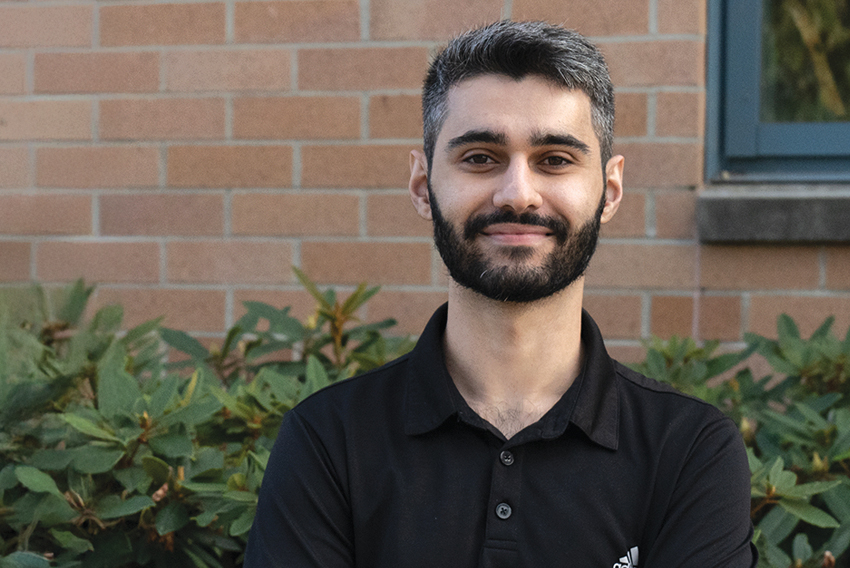
Growing up on the North Shore of Vancouver, it was always a dream of mine to attend a local international boarding school—up until I was employed by that same school.
During my younger days, I walked by the school weekly with my friends. We were all jealous of the students attending there. “Look at this soccer field,” we’d say, admiring their facilities. “I bet these kids play on it every day! I wish we had this at our school.”
We were so preoccupied with the physical appearance of the school; we barely considered what went on within its walls.
From dream to reality
After graduating with a psychology degree, I wanted to gain some real-world experience. As it turned out, the same school I’d wanted to attend was hiring. Lucky me: I landed the job. Soon, I received a presentation by the school principal, introducing me to the student body. These young people came from many different parts of the world.
My smile and excitement turned into a somewhat clear frown as the principal explained how a significant portion of learners were from families whose parents, despite money and success, wanted their children far away so they could focus on work or other projects.
This wasn’t the case for everyone. Some students were simply looking for a better education; however, in most cases, distance was part of the story. Many had become detached from their parents even before arriving in Canada.
Suffering behind a gilded wall
After about six months, I was promoted to Senior Youth Advisor, which meant I had 50-plus students under my direct supervision from 4:00 p.m. to midnight. This is when the realization hit me that I had had it great during my high school years.
The cultural tensions inside the school were magnified for me in moments when a student would cautiously knock on my office door, their voice lowered, eyes scanning the hallway to make sure they weren’t seen by their peers before stepping inside my glass office.
My eyes were opened: I needed to ignore the book’s cover! Because just like a book, the students’ content was hidden from view. It consisted of culture, language and upbringing—all vital, considering what students were struggling with and how they handled stress and emotional stability.
In some cultures, mental disorders are often viewed as a sign of weakness. For others, these complex challenges are not even seen as real. This is ironic: some cultures are quick to label someone with a disorder or illness to justify ostracizing them, while others use the label to avoid responsibility for looking after the individual. It helps explain why some foreign kids in the Canadian international school system struggle to seek support and access youth mental and social services.
A host of fears
For many students, mental health struggles weren’t simply a matter of “feeling sad” or “being stressed.” They were a negotiation between identities; the one they carried from home, and the one they were expected to adopt in Canada.
For some, talking about their problems was like betraying family trust or expectations. To me, the thinking seemed to be: “If my parents find out I revealed my weaknesses to you, rather than checking in with them first, they’ll be disappointed.”
For others, discussing mental health at all was unfamiliar territory. They lacked communication skills for these new emotions, especially in English. And for many, the fear wasn’t only about being judged by their peers, but being misunderstood by the adults meant to support and guide them. A recurring fear was that anything they shared with me might be relayed back to their parents.
This wasn’t because they had something to hide. The consequences of disclosure were just unpredictable. “My mom will worry,” one student told me. Another said, “My dad will think something is wrong with me. He’ll think I can’t make it here.”
Sometimes, students feared their parents would misunderstand the problem entirely, interpreting anxiety as defiance, depression as laziness or social withdrawal as a personal insult. These were not bad parents, just people shaped by their own cultural frameworks and education about mental health and how to handle their children’s new needs. They still loved their kids from afar.
Students were scared of being erased, or having their experiences rewritten through a cultural lens that didn’t fit their new reality. It was only when they started reshaping that reality that they could step out of their comfort zone and feel secure sharing their emotions.
A youth mental health rethink
Working in this environment showed me that when we talk about mental health support for youth, culture cannot be an afterthought. Culture shapes:
how emotions are expressed and viewed
how vulnerability is understood
what “help” looks like
which approach will make young people feel safe enough to discuss their feelings
In my work, I would always start out with a vulnerable story about myself. Coming from an immigrant family, some of the challenges were familiar territory. Typically, this opened the door to deeper conversations. It was also important to let them know their experience was unique and their parents might struggle to understand, given their own upbringing.
In time, the school I once admired for its facilities became something entirely different: a place where culture, plus social and mental development, collided daily with vulnerability; where young people navigated not only academics, but identity, belonging and the complicated distance between themselves and the families who loved them, even if imperfectly.
I learned that true support begins with listening, cultural humility and the belief that every young person deserves to feel seen, no matter where they come from. It’s so important for kids from diverse backgrounds to come forward without fear of being judged. It’s also vital for counsellors and teachers to identify these individuals early and let them know it’s good to seek help.
To young people, I encourage you to go, pave your own roads, instead of walking the same roads your parents took during their development.
About the author
Erfan was born in Montreal in 1995 before moving to Iran at the age of 5. The move was intended to let him be flexible in both Iranian and Canadian cultures. Erfan holds a BA in psychology and has worked in advising and coaching youth