Reprinted from the Involuntary Treatment: Tensions and choices issue of Visions Journal, 2025, 21 (2), pp. 39-40
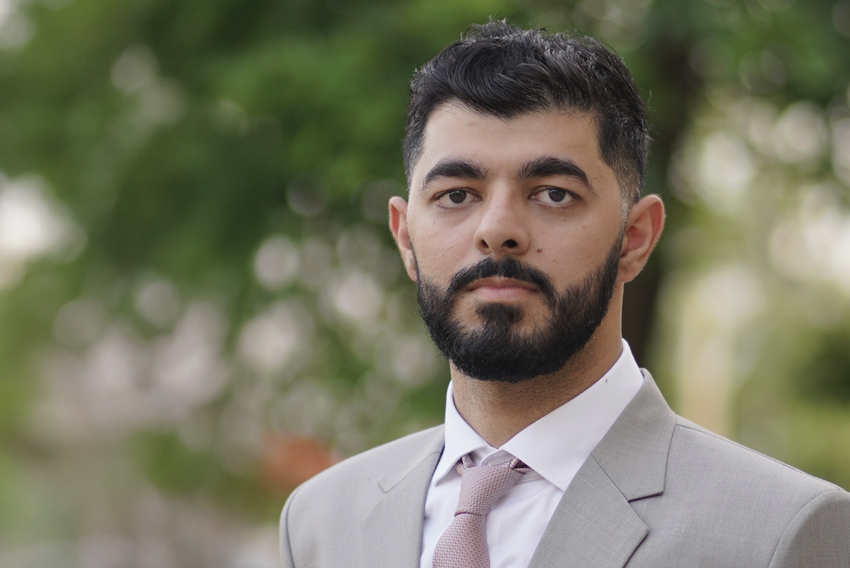
The following is a conversation between CMHA BC’s Bakht Anwar (BA) and Hassan Nawaz (HN) on his experiences with involuntary treatment. Hassan explores what’s known as culturally competent care and its vital role to BC's mental health system.
BA: Tell me a bit about yourself.
HN: My family migrated from Pakistan to Canada about 20 years ago. Like many South Asian families, we were led by the idea of a "better life" in the West. But I quickly discovered that this promise was empty.
Growing up, I lived in two worlds at once. One, my Eastern heritage, with its depth, continuity and spiritual anchoring. The other, Western society—materially advanced, but spiritually numb. That duality fractured my sense of self-identity. I was torn between preserving what was timeless within me and conforming to a system that assimilates people. This internal struggle was the root of many mental health challenges later in life.
BA: As you reflect on your 20 years of experience in Canada, can you share what led up to your involuntary admission?
HN: My admission can't be separated from post-colonial trauma in South Asian societies. Colonization stripped my people of resources, dignity and sovereignty. Later generations got stuck in survival mode. Families who migrate in search of "opportunity," often dislocated, cut off from community, are forced to adapt to an environment that overlooks their history.
For younger people, Canada offers material advantages, yes—but at the cost of disconnection. We are neurobiologically obligated to inherit a fractured world view from our parents, while being pressured to mould ourselves into the Western stencil, which cannot speak to the depth of our identity. I was caught between two anchors: the East, which I felt strongly about but could not fully live, and the West, pressuring me to assimilate into its hyperreal stencil for life.
This tension led to confusion, loneliness and, eventually, depression. But instead of recognizing the wounds I was grappling with, the Western system reduced my struggle to a "disorder," something to be managed chemically.
BA: What was it like when you were first brought into involuntary treatment? How did you feel?
HN: My treatment was shallow and incomplete. Psychiatrists approached me with their charts and diagnoses. Yes, on a factual level, they were not wrong. But their Western framework is empty. It reduces the human being to brain chemistry and behavioural patterns, but no category for the soul.
In Islamic and eastern epistemology, the human being is not fragmented. We are whole: body, mind and spirit. Our suffering is not a mechanical error. It's a misalignment between our inner reality and the divine order of life. What I received in the hospital was not healing, but management. The prescriptions were a Band-Aid on a spiritual wound.
BA: Was there anyone on your care team you could resonate with or who worked to build in your spirituality or culture?
HN: There was a psychiatrist who shared my heritage and identity. Though trained in the same Western institutions, he carried an understanding of my cultural and spiritual foundations. When I spoke with him, he did not dismiss my philosophy as irrelevant—he engaged. That was the f irst moment I felt I could resonate with a health care provider. But it was telling that it took someone who shared my heritage and background to see me as whole.
BA: What could have made your care more culturally competent?
HN: If it had expanded beyond the individual, the care would have been transformative. In our tradition, healing is never isolated—it's relational, familial and societal. For South Asians, you can't separate mental health from the intergenerational trauma of colonization. Western psychiatry dressed up with "cultural sensitivity" won't work. We need to reconnect with our philosophical and spiritual foundations. We must decolonize and reconstruct our mind and soul.
BA: What was the discharge process like? Did you feel ready to leave?
HN: The psychiatrist discharged me when they believed my perception of reality had stabilized and the medication had taken effect. I was given a year of treatment and psychological follow-up. On the surface, this seems responsible. But it was superficial. The root causes of my crisis—intergenerational trauma, migration and the war on my identity—were untouched.
I left the hospital outwardly stable, but inwardly unchanged. The Western system made me functional again for society, without addressing that it broke me. I had to rediscover through my own searching how colonization and separation from my heritage had shaped my pain.
BA: What can make the mental health system more holistic?
HN: We need what I call pre-emptive recovery. That means rebuilding safeguards rooted in culture, tradition and community. The East has always understood that healing is not about numbing symptoms with pills, but about restoring inner balance guided by insight. Our ancestors preserved wellness by seeing us as whole— physical, emotional and spiritual.
Western medicine may have its uses, but it's also narrow, and it's mostly focused on our biochemical makeup. Real healing is based on trust, belonging and meaning. It means drawing on traditions the West dismisses as "primitive."
BA: What would you want health care providers or policy-makers to know about your experience? How could the mental health system provide better culturally competent care?
HN: I would say the Western model of care is incomplete. It views human beings as machines to be managed, rather than souls to be nourished.
If we're serious about culturally competent care, it must include genuine humility—recognition that Eastern traditions offer holistic insights into the human condition. Our heritage includes timeless healing principles that address not only the mind, but the heart and soul. True healing lies not in more pills, prescriptions and protocols, but in reconnecting with the wisdom the East has safeguarded for centuries.
About the author
Hassan, from Surrey, BC, is self-taught and explores neuroscience and spirituality. Outside of daily life he focuses on bridging the gap between faith and science in today’s age, with a deep interest in how people perceive themselves and their environment